EnergyCompany Update
Equus Energy (ASX: EQU) Certifies 1.56 Tcf Near-Field Gas Potential
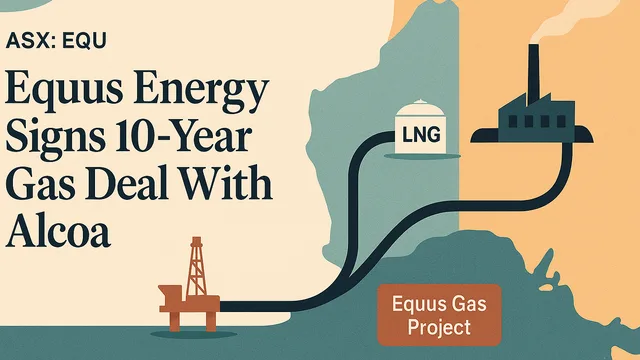
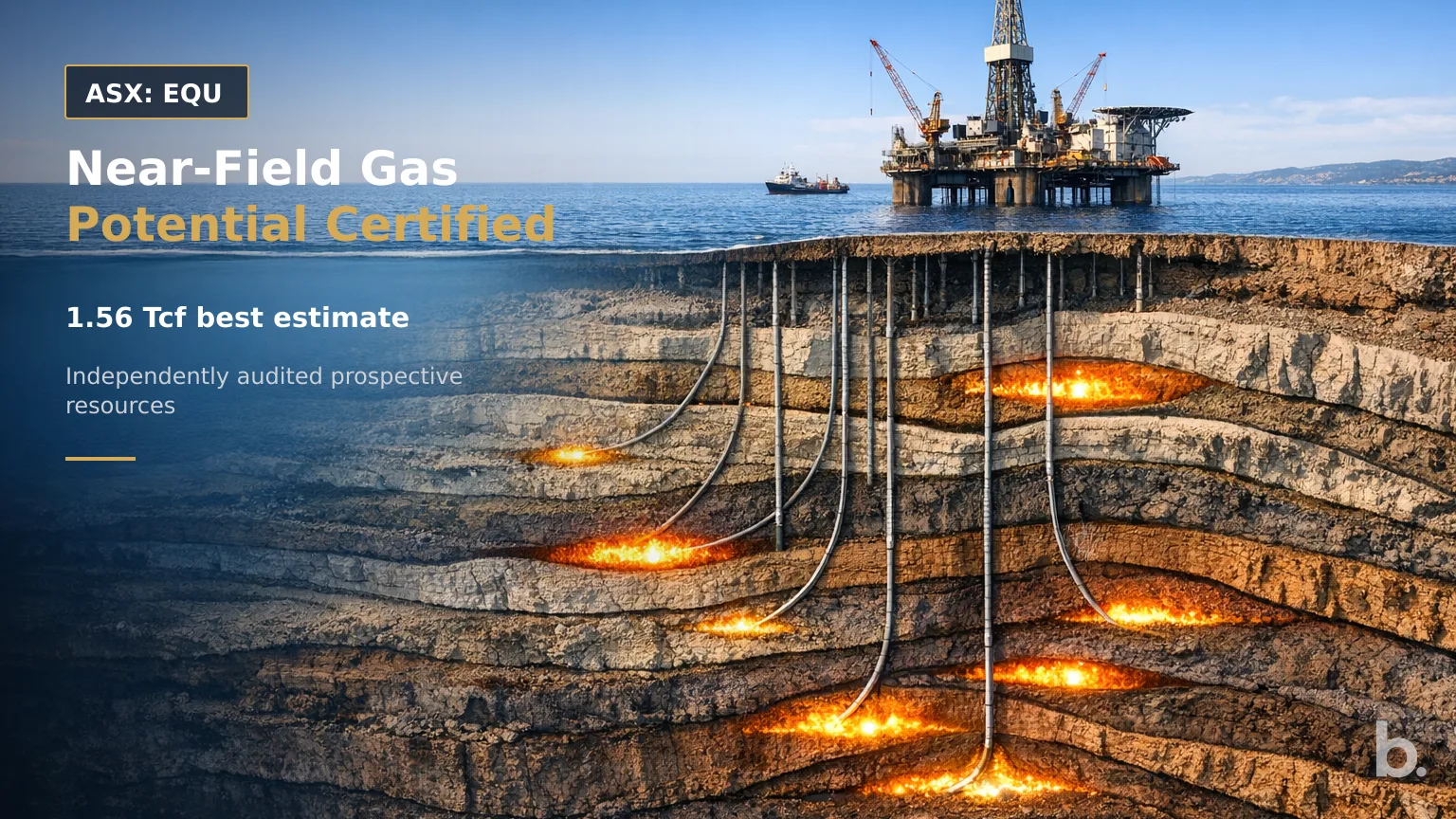
Equus Energy has added an independently audited 1.56 Tcf best estimate of near-field prospective gas resources. The unrisked portfolio will be presented through its current project partnering process.
Listen to article
0:00 / 2:44Equus Energy has added an independently audited best estimate of 1.56 trillion cubic feet of prospective gas resources around its Equus Gas Project, expanding the exploration opportunity alongside its existing discovered resource base.
RISC Advisory audited the near-field portfolio, which sits adjacent to Equus’ existing gas discoveries on the North West Shelf. The company holds a 100% interest in the relevant exploration and retention permits, meaning the reported volumes are both gross and net to Equus.
The new 2U estimate compares with an existing 1.7 Tcf 2C contingent gas resource. However, the classifications are materially different: the prospective resources relate to undiscovered accumulations and are reported on an unrisked basis, while the contingent resource represents discovered gas.
Equus said the additional potential will form part of its current project partnering process, giving prospective partners a view of both the proposed initial development and possible expansion through exploration.
Size comes with exploration risk
The portfolio has an unrisked low estimate of 791 billion cubic feet, a best estimate of 1.56 Tcf and a high estimate of 2.98 Tcf. Individual chances of geological discovery range from 21% to 52%, underscoring that drilling, appraisal and further evaluation are required.
The largest individual targets on a 2U basis include two intervals at Briseis Deep, estimated at 268 Bcf and 241 Bcf, and the Mentor Deep Lower Barrow Group target at 215 Bcf. Four prospects are located directly above or below existing discoveries, potentially allowing exploration drilling to be integrated with proposed development work.
The estimates draw on permit-wide modern 3D seismic coverage and data from 22 evaluated wells. The dataset also includes five drill stem flow tests and about 500 metres of full-bore core data. Equus reported that historical exploration across the permits delivered an 83% drilling success rate, although that record does not remove the geological risk attached to the new targets.
Seismic interpretation has been used to map channel systems, fault blocks and amplitude-supported targets. At Mentor Deep, Equus said the prospective Lower Barrow Group sands display the same seismic signature as gas-bearing sands in the discovered Mentor field, where two wells confirmed reservoir porosity and permeability.
Further studies planned for 2027
Equus plans additional subsurface studies during 2027 to identify and rank more prospects across its broader permit position. No drilling timetable or exploration budget was disclosed in the announcement.
For investors, the immediate significance is the greater potential scale available for assessment during the partnering process. Converting any of the 1.56 Tcf best estimate into discovered resources will depend on future exploration success and, subsequently, a viable development pathway.
Latest EQUUS ENERGY LIMITED ASX Announcements
- 18 Nov 2026 · 9:46 amCompany Update
- 4 Nov 2026 · 10:08 amCompany Update
- 26 Oct 2026 · 9:01 amMeetings & Governance
- 23 Oct 2026 · 8:57 amQuarterly Reports
- 15 Oct 2026 · 8:22 amCompany Update
- 7 Oct 2026 · 8:20 amMeetings & Governance
- 16 Sept 2026 · 8:27 amCompany Update
- 14 Sept 2026 · 4:08 pmSecurities Administration